
CSIA Certification Explained: What It Means for Homeowners
CSIA certification is one of the most respected credentials in the chimney industry. Here is what it actually means, what the exam covers, and how to verify your chimney sweep is certified.
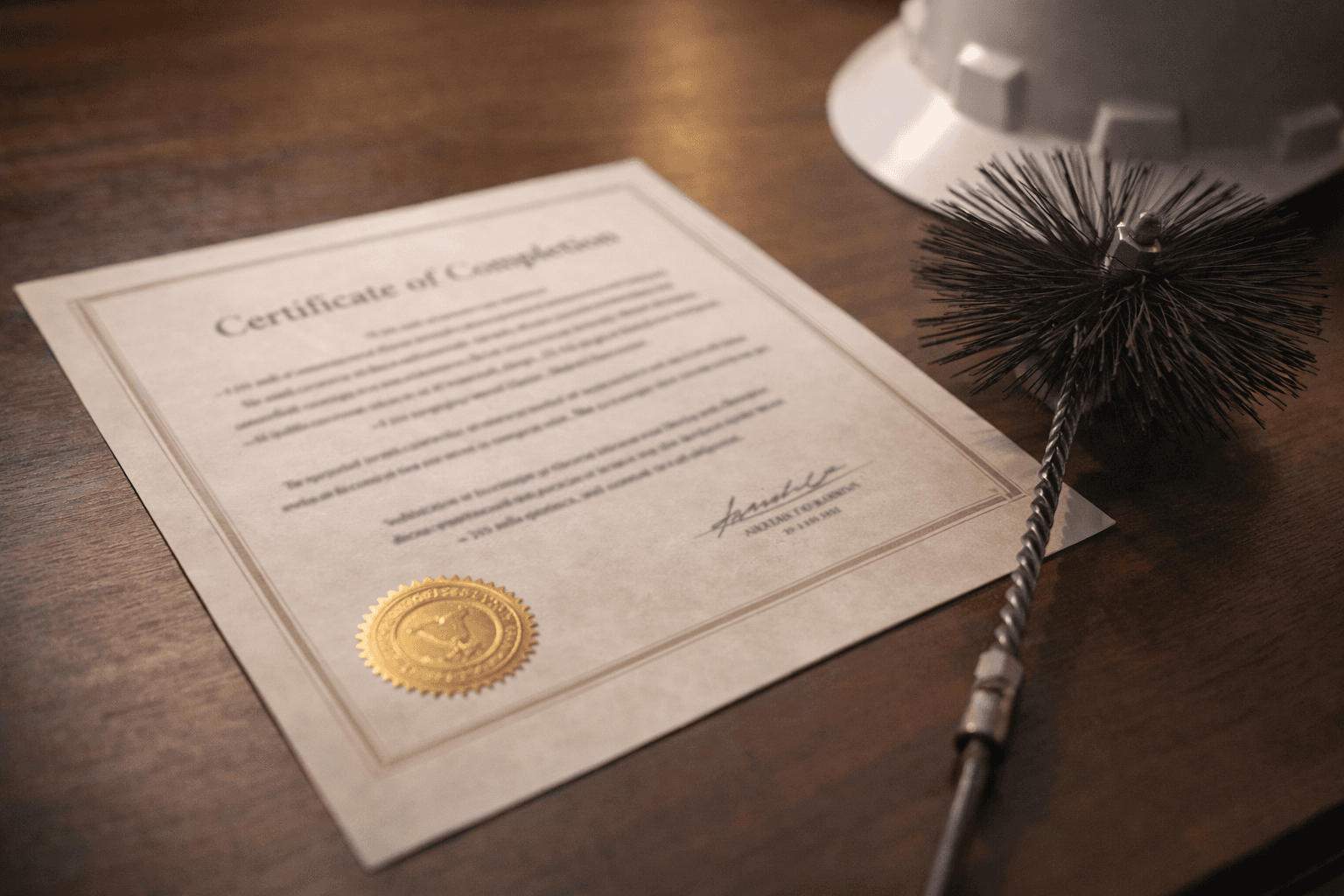
If you have ever searched for a chimney sweep, you have probably seen “CSIA Certified” on some company websites and not on others. You might have wondered whether it matters. The short answer: it is one of the most recognized credentials in the chimney industry, and here is why.
What Is the CSIA?
The Chimney Safety Institute of America (CSIA) is a nonprofit organization founded in 1983 with a single mission: reducing chimney and venting hazards. CSIA does not sell chimney services or products. It develops and administers the credentialing programs that define professional competency in the chimney industry.
CSIA is recognized by over 40 state and local jurisdictions that reference CSIA standards in their building codes or consumer protection guidelines. It is one of the most widely recognized professional standards in the chimney industry.
Certification Types
CSIA offers several certification programs. The two most relevant for homeowners are:
- CSIA Certified Chimney Sweep (CCS). This is the flagship certification. It covers chimney inspection, cleaning, and maintenance across all fuel types — wood, gas, oil, and pellet. This includes gas fireplace annual service, which many homeowners overlook. A CCS has passed a comprehensive exam covering fire science, chimney construction, venting principles, NFPA 211 standards, and applicable building codes. This is what most homeowners should look for when hiring a chimney professional.
- CSIA Certified Dryer Exhaust Technician (CDET). This covers the inspection, cleaning, and maintenance of clothes dryer exhaust systems. Dryer fires cause an estimated 2,900 home fires per year according to the U.S. Fire Administration, and CDET-certified technicians are trained to identify and mitigate the risks. Some chimney companies offer both chimney and dryer vent services.
What the Exam Covers
The CSIA Certified Chimney Sweep exam is not a formality. It is a rigorous, proctored examination that tests knowledge across a wide range of topics:
- Fire science: How fires start, spread, and behave in chimney systems
- Chimney construction: Masonry and factory-built chimney systems, components, and materials
- Venting principles: Draft, airflow, and proper venting for different fuel types
- NFPA 211 standards: The national standard for chimneys, fireplaces, vents, and solid fuel-burning appliances
- Building codes: International Residential Code (IRC) requirements related to chimneys and fireplaces
- Inspection procedures: Level I, II, and III inspection protocols and when each is appropriate
- Cleaning methods: Proper techniques for different chimney types and conditions
- Safety protocols: Jobsite safety, equipment handling, and homeowner communication
Candidates must score at least 80% to pass, and the exam covers material from a substantial body of CSIA educational resources. It is not something you pass by showing up.
Continuing Education
CSIA certification is not a one-time achievement. Certified professionals must complete continuing education to maintain their credential. This means they stay current on evolving standards, new technologies, code changes, and best practices. Certification renewal ensures that a CSIA credential represents current knowledge, not knowledge from a decade ago.
How to Verify CSIA Certification
CSIA maintains a public online directory of all currently certified professionals at csia.org. You can search by name, company, or location. Here is how to verify:
- Visit the CSIA directory at csia.org and search for the company or individual.
- Ask the chimney professional for their CSIA certification number directly.
- Look for the CSIA logo on their website, truck, and business card — but always verify independently, because anyone can print a logo.
- Confirm the certification is current, not expired.
Certification vs. State Licensing
It is important to understand that CSIA certification and state contractor licensing are two different things:
- CSIA certification is voluntary and national. It proves that a professional has demonstrated knowledge of chimney safety standards through a rigorous exam and ongoing education.
- State licensing is mandatory in many states and governs who can legally perform contractor work. Requirements vary widely — some states have specific chimney licensing, others fold it under general contractor or specialty trade licenses, and some have no chimney-specific requirements at all.
Ideally, you want both: a CSIA-certified professional who also holds the appropriate state contractor license for your area. CSIA certification demonstrates formal training in chimney safety standards. State licensing confirms they meet your state's legal requirements.
What Certification Does Not Guarantee
Being transparent about limitations builds trust: CSIA certification proves knowledge and professional commitment, but it does not guarantee character. A CSIA-certified sweep can still overcharge, underdeliver, or have poor customer service. What certification does eliminate is the “no training at all” risk. You know that a certified professional has, at minimum, studied chimney safety extensively and passed a rigorous exam.
Pair CSIA certification with other due diligence: check online reviews, verify insurance, confirm state licensing, and get multiple quotes for significant work. Certification is the foundation of trust, not the entirety of it.
The Numbers
There are roughly 2,000 actively CSIA-certified chimney sweeps in the United States. The total number of people and companies offering chimney services is many times higher. That gap reflects the fact that CSIA certification is voluntary and that many chimney professionals demonstrate their competence through other paths — state licensing, trade apprenticeships, guild memberships, and years of established work in their communities. When you choose a CSIA-certified professional, you know they have passed a rigorous, standards-based exam. When evaluating non-certified professionals, look for state licensing, insurance, verifiable experience, and strong customer reviews.
Sources
- Chimney Safety Institute of America (CSIA) — Certification programs and professional directory: csia.org
- National Fire Protection Association (NFPA) Standard 211 — Standard for Chimneys, Fireplaces, Vents, and Solid Fuel-Burning Appliances
- U.S. Fire Administration — Dryer fire statistics and prevention: usfa.fema.gov
Find a Trusted Chimney Professional Near You
Don't take chances with your chimney. Search our directory of verified professionals — every listing includes credential details so you can make an informed decision.