
The $23,000 Chimney Lesson That Built This Site
A contractor I trusted quoted me $23,000 to repair my chimney or it would burn my house down. Three more opinions later, the actual fix cost $6,500. That gap is why this site exists.
A founder's story about trust, fear, and why your 5-star contractor might not be giving you the full picture.
I want to tell you the story that founded this site. It starts, as many homeowner nightmares do, with something completely routine.
A Simple Chimney Cleaning
We had a chimney sweep we'd used for years. Twice a year, like clockwork — once before the season started and once after. He was reliable, reasonably priced, and got the job done. Then one day he just... vanished. Couldn't reach him by phone. His website went dark. No forwarding number, no explanation. Just gone.
So we did what everybody does. We asked around. Friends, neighbors, the guy at the hardware store. One name kept coming up. Let's call him Bert, for the sake of argument.
Bert had everything you'd want to see. Over a hundred reviews on Google, virtually all five stars. CSIA certified — that's the Chimney Safety Institute of America, the gold standard credential in the industry. Multiple friends recommended him personally. On paper, Bert was exactly the kind of professional you'd hope to find.
We booked him for a routine cleaning.
“The Worst I've Ever Seen”
Bert arrived on time, which felt like a good sign. He did what appeared to be a thorough inspection — looked around the firebox, shone a flashlight up the flue, made some notes. Then he pulled out a camera, fed it up through the chimney, and started taking pictures.
When he came back inside, his whole demeanor had changed.
He told us we had Stage 3 creosote buildup — the most severe classification. For those unfamiliar, the CSIA recognizes three stages. Stage 1 is a light, brushable soot that any routine cleaning handles. Stage 2 is a thicker, flaky buildup that requires more aggressive removal. Stage 3 is a dense, glazed, tar-like coating that's extremely difficult to remove and highly combustible. It's the stage where chimney fires become a real concern.
According to Bert, we were a solid Stage 3. The worst he'd ever seen, he said. He couldn't even clean it — wouldn't even attempt it. And under no circumstances should we use the fireplace. Our house could burn down.
Now, hearing a professional tell you that your home is a fire hazard has a way of focusing the mind. You don't think about budgets or second opinions when someone in a uniform is telling you your family is in danger. You just want to fix it.
Which, I suspect, is exactly the point.
The Estimate
A few days later, the estimate arrived. Bert laid out two options.
Option A: Full Rebuild — $23,000. This involved tearing down the front face of the fireplace, gutting the interior, replacing the chimney liner from top to bottom, and reconstructing everything. It was presented as the “right way” to do it if we wanted to keep using our wood-burning fireplace as-is. Twenty-three thousand dollars for what had started as a $200 cleaning appointment.
Option B: Wood-Burning Insert — $11,000 to $12,000. Bert's recommendation. A wood-burning insert, for those unfamiliar, is essentially a metal firebox with a glass door that slides into your existing fireplace opening. It burns more efficiently, but you lose the open flame of a traditional hearth — which, for my wife, was the whole point of having a fireplace at all. He explained that the insert was more efficient anyway, would heat the room better, and was “only” half the cost of a full rebuild. He happened to sell the inserts. He'd also do the installation. And the liner work that went along with it.
Notice what's missing from that list. There's no Option C. No “here's the more affordable path.” No “you could also just get the liner replaced.” Just two choices, both of which put a lot of money in Bert's pocket.
My wife and I looked at each other. I wasn't willing to drop $23,000 on a rebuild. She wasn't willing to give up the ambiance of an open wood-burning fireplace for a metal box with a glass door, no matter how “efficient” it was.
So we did something Bert probably wasn't expecting. We called someone else.
Three More Calls
I won't pretend the second call was easy. When a certified professional has just told you your chimney is a death trap, calling another company feels almost reckless. What if Bert was right? What if I was putting off a critical repair because I didn't like the price tag?
But the numbers didn't sit right with me, and neither did the pressure. My instinct said there had to be a better option, so I picked up the phone.
The second contractor's visit was different from Bert's, but not exactly reassuring. Two guys came out, shone a flashlight up the flue, looked at the pictures, and said they could get a liner in there — but it would require significant disassembly of the chimney.
The good news was the price: $6,300. For the first time, it felt like we had a workable solution, so we asked for a written quote.
While we were waiting, I did what I should have done earlier and looked into the company. There were no recent reviews, no real Google presence, and the older Yelp reviews were alarming — multiple people calling them scammers. Then I checked their business license and found that it had expired more than a year earlier.
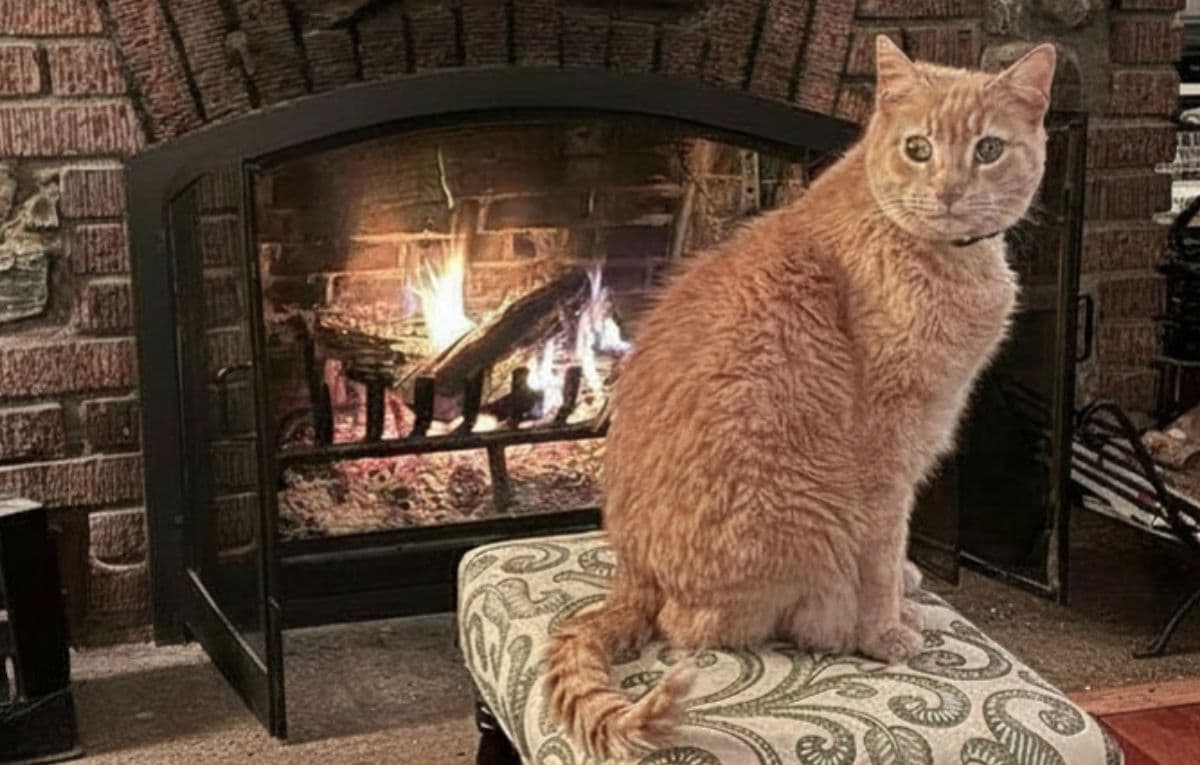
We were deflated — all three of us, if you count our cat, who had a serious emotional investment in that fireplace. We still weren't sure whether to take a chance. They had been nice on the phone, but they had also spent a lot of time bashing other chimney pros and calling them the worst bunch of... well, you can fill in the blank. We were still considering them, partly because it sounded like the business might have changed hands to another family and the old reputation might not tell the whole story.
We decided the written quote might help us make the call. Several days passed and nothing arrived. My wife texted to follow up, and they said they would send it right out. A few hours later, we received a QuickBooks invoice with one line item — “fireplace repair” — and a “Pay Now” button. Not a scrap of other detail.
At that point, it was clear the second opinion wasn't going to be the end of the story. I was starting to panic. It was nearly Thanksgiving, and we still hadn't found anyone we trusted. At this rate, it looked like we would spend the whole winter without our beloved fireplace.
That night I started going through Google reviews, but in our area almost every chimney company looked great on paper. After a while I stopped trusting star counts and started looking for a mix of signals instead: proximity, a real website, a working contact form, and some evidence that the business actually existed.
On the Tuesday night before Thanksgiving, I filled out forms for two nearby companies and waited.
By 9 a.m. the next morning, one had already replied and offered to send someone that afternoon, even though it was the day before Thanksgiving. Later that same day, the other company got back to me and booked a visit for the Friday after Thanksgiving. For the first time, it felt like I was making progress instead of just spinning my wheels.
The Right Call
That afternoon, two guys showed up, looked up the chimney with a flashlight, and reviewed the original photos. They were friendly, personable, and got right to the point. One of them went out to the van, wrote up a detailed estimate, and handed it to me on the spot: $6,500 for a new chimney liner and some substantial fireplace repairs. Best of all, they could do the work in a week or two, and it would not require tearing down even one bit of the chimney.
Meanwhile, that same afternoon, I also confirmed the Friday morning appointment with the other company. I hoped I would soon have two real quotes to compare, even though I already felt very good about the company I had just met.
Friday came, and a man arrived at the door who seemed not to know why he was there. I explained that I had called because I needed a chimney liner and some firebox repairs.
He took about a two-minute look up the chimney, asked to step outside, looked at the top, and told me I needed a chimney cap, a little cement work in the firebox, and a mechanical cleaning in the chimney.
The total was $3,200. He never provided a written quote, and none ever arrived later. When I took a closer look at the top of my chimney afterward, there was already a chimney cap there, so I still don't know what he was talking about. At that point, my list had effectively narrowed to one option. I don't know if it was the absolute best price I could have found, but it was the only complete, credible quote I had — and it was a lot better than $23,000.
What Actually Happened
We got the liner replaced. It took one day. The crew was in and out, cleaned up after themselves, and the total came in right at $6,500. We've been using our fireplace — our original, open, wood-burning fireplace — ever since.
Let me be clear about something: I don't know for certain that Bert was running a scam. Maybe he genuinely believed a full rebuild was necessary. Maybe his standards are just extremely conservative. Contractors can have honest disagreements about the right approach.
But here's what I do know. He gave me two expensive options, both of which put money in his pocket, and left out the less drastic path that only emerged once I kept calling around. Other contractors saw ways to deal with the problem without tearing apart the fireplace or steering me into an insert. He used alarming language that made it feel like my family was in immediate danger. And he happened to sell the very product he was pushing.
That's not a consultation. That's a sales pitch. And it taught me something important: even a skilled, respected pro with great credentials and glowing reviews may still not steer you toward the simplest honest fix.
The Part That Bothers Me Most
Here's the thing that really stuck with me. I did everything right. I asked for personal recommendations. I checked the reviews. I verified the certification. I hired the most credentialed, most recommended professional I could find. And I still almost got taken for $23,000 — or at minimum, an unnecessary $12,000 wood-burning insert.
If it could happen to me — a reasonably informed homeowner who was actively trying to make a good choice — it can happen to anyone. And that thought kept nagging at me.
The reviews were real. The certification was real. The five-star rating was earned through genuinely good customer experiences. But none of that told me whether I was getting an honest assessment of what my chimney actually needed. People were rating the experience — the punctuality, the professionalism, the clean work — not whether the recommendation itself was sound. How would they even know? Most homeowners don't get a second opinion on a chimney inspection. They trust the expert and write the check.
Why This Site Exists
That experience sent me down a rabbit hole. I started researching how the chimney industry actually works. I talked to the fire inspector at our local fire department. I talked to a building inspector. I read everything I could find about CSIA certification, creosote classification, and what a chimney inspection should actually cover. And I learned about the gap between what homeowners can verify and what they have to take on faith. I realized something that should have been obvious: the tools we use to evaluate professionals — star ratings, review counts, even certifications — are measuring the wrong things. They tell you about competence and customer service. They tell you nothing about whether you're getting a fair recommendation at a fair price.
TrustedHearth exists because of Bert. Not to shame anyone or call out specific contractors, but because homeowners deserve better tools for making one of the most trust-dependent decisions they'll face as a homeowner. When someone tells you your chimney needs $23,000 worth of work, you need more than a star rating to know if that's true.
If you want to know more about how we verify the pros in our directory — and the standards every listing has to meet — you can read about our mission and methods.
What You Should Take Away From This
I'm not telling you to distrust every chimney professional. Most of the contractors I've encountered since that experience have been straightforward, honest people who take pride in their work. But I am telling you this:
Get multiple quotes. For any job over a couple thousand dollars, get at least two or three opinions. Not because every contractor is dishonest, but because the range of recommendations and prices can be enormous. My quotes ranged from $3,200 to $23,000, and they weren't even all for the same scope of work. That's how wide the gap can be.
Ask for all the options. A good contractor will walk you through the spectrum — from the minimum viable fix to the gold-plated solution, and everything in between. If someone only presents one or two options, both expensive, ask directly: “What's the most affordable way to address this safely?”
Be skeptical of fear. Real dangers exist, and good professionals will tell you about them. But they'll do it calmly, explain the timeline, and give you space to make a decision. If someone is making you feel like your house will burn down tonight if you don't sign a contract right now, take a breath. Get a second opinion. A genuinely dangerous situation will still be dangerous tomorrow morning when another contractor can come take a look.
Understand what reviews actually measure. A five-star rating tells you that past customers had a good experience. It doesn't tell you whether they needed the work they paid for. This is an important distinction, and it's one the industry hasn't figured out how to solve yet.
Certifications verify knowledge, not intent. A CSIA certification means the contractor passed a rigorous exam and knows chimneys inside and out. That's valuable — you definitely want someone who knows what they're doing. But it doesn't mean they'll recommend the cheapest honest solution. A certified mechanic can still tell you that you need new brakes when you just need new pads.
This is a true story. Some details have been simplified and the contractor's name has been changed, but the quotes, the recommendations, and the outcome are exactly as they happened. If you're facing a similar situation, I hope this helps you ask the right questions.
— Kevin Bross, Founder of TrustedHearth
Find a Trusted Chimney Professional Near You
Don't take chances with your chimney. Search our directory of verified professionals — every listing includes credential details so you can make an informed decision.